Disclosure: Some of the links on this site are affiliate links. This means that if you click on the link and purchase an item, I may receive a small commission at no extra cost to you. I only recommend products and services that I personally use, trust, or believe will provide value.

How I Accidentally Became a PACU Nurse
First off, I’ll admit that I absolutely got lucky and feel blessed that I accidentally stumbled upon PACU nursing.
Almost 10 years ago, after an unplanned 6-month sabbatical from nursing, I was nervously applying again to various nursing jobs just to pay for living because unfortunately for me I’m not a nepo baby or a trust fund kid.
I literally walked into an interview at an Ambulatory Surgery Center (ASC) as a PACU nurse, not really expecting much. I don’t even think I was familiar with what an ASC was at the time.
But on the spot I was hired.
Is PACU Nursing Easy?
Almost 10 years after leaving critical care nursing, I’m still very much thankful that I accidentally landed a Pre-Op and PACU nursing job, because my work life has definitely turned around for the better.
I’m not saying PACU nursing is easy. There are definitely hard days, like having two high-need, high-acuity patients at the same time (although that rarely happens in my PACU). Patients are in pain, nauseous, and sometimes just generally not happy or feeling well after surgery and anesthesia.
But there are definitely easy days too. Thank God there are way more easy days than the “I want to cry with the patient” days. Sometimes, you basically wait for the patient to wake up for 30 to 40 minutes, and when they do, they’re happy, have no pain, no nausea, and are ready to go home happily.
Basically, even with the bad days, I still find PACU nursing less stressful than ICU or floor nursing. You’re there to take care of a post-op patient’s immediate needs, stabilize them, manage their pain and nausea, and then eventually discharge or transfer them. Most patients move on fairly quickly, unless they need to be admitted to an inpatient unit for further observation or treatment.
You also rarely have to manage a patient’s chronic illnesses for an entire shift. And to be honest, compared with ICU and Med-Surg nursing, you don’t see death nearly as often in PACU.
For me, that difference has made PACU nursing much more sustainable long term for my mental health and well being as a nurse.
Is PACU Considered Critical Care?
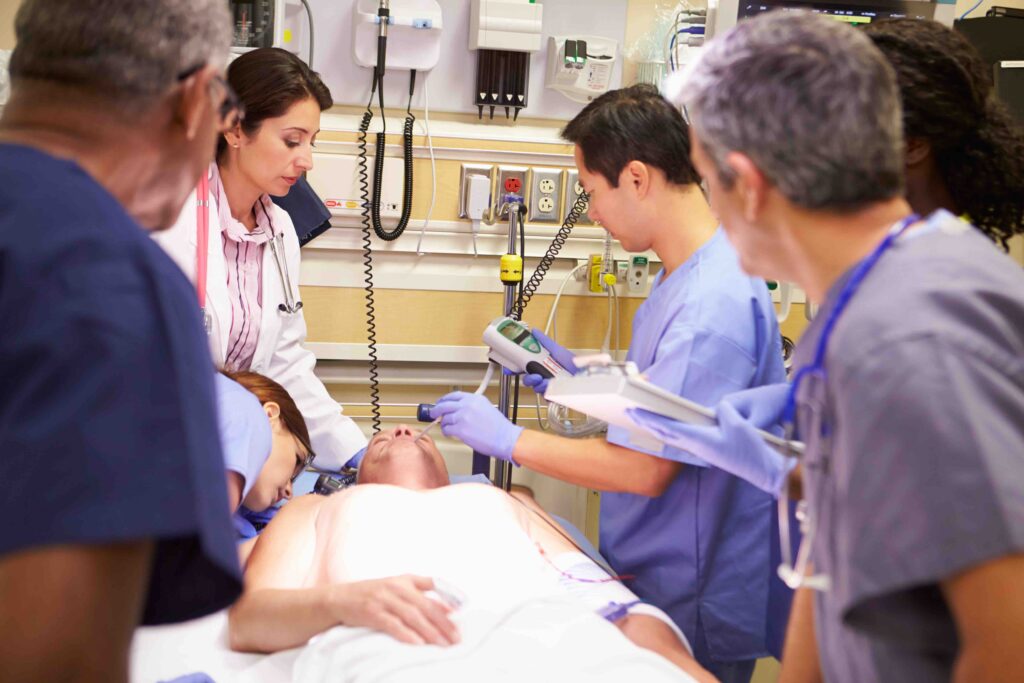
Yes, PACU is generally considered a critical care area because even though many patients are relatively healthy, especially those having elective or outpatient procedures, patients coming out of surgery and anesthesia are still vulnerable to sudden complications and hemodynamic instability.
These can include airway obstruction, respiratory compromise, significant blood pressure changes, bleeding, cardiac complications, and other anesthesia or surgical-related emergencies. A patient can appear stable and then deteriorate very quickly, which is why close monitoring and strong assessment skills are so important in PACU.
Because of this, even in ambulatory surgery centers where patients are generally healthy, we typically maintain a 1:2 nurse-to-patient ratio during the immediate recovery period. Patients are still recovering from anesthesia and require close observation until they meet appropriate recovery and discharge criteria.
Why PACU Is Such a Desirable Nursing Job
Personally, PACU nursing is the first nursing job where I never had pre-shift anxiety and felt very minimal toxicity from work, patients, and even physicians.
(Although once in a while there’s that one nurse who likes to bully the whole unit and tries to become the main character, but that’s another story.)
It’s literally day and night compared to inpatient nursing.
In an ASC, patients are generally healthier and well (mostly) ambulatory because most surgeries are elective. There’s basically no heavy lifting involved, except maybe during surgery in the OR when a patient is still under anesthesia and needs to be transferred from the OR table to the gurney.
Coming Up: Ambulatory Surgery Centers vs Inpatient Surgery Centers
And don’t forget the ratio.
And lastly, where I work, ASC PACU is considered a specialty unit, so we get paid the same as ICU nurses.
So why work extra harder (and I know ICU nurses work really hard) when we get paid the same?
Because of all of these things — better ratios, healthier patients, and a more predictable schedule — PACU has become one of the most desirable nursing specialties.
And when a nursing job is that good, people rarely leave.
With that, you can probably already tell that PACU nurses rarely leave. Most of my coworkers retire here. I even had one colleague who retired at 70, then came back after 6 months because she got bored.
Which leads to the main reason many nurses ask me:
Why is it so hard to get into PACU?
Interested in PACU Nursing?
What its like working as a PACU nurse

Why PACU Is One of the Hardest Nursing Units to Get Into
With that said, here are some of the main reasons why it’s so difficult to get into a PACU unit.
1. Nurses Tend to Stay Longer and Retire Here

Just like I mentioned above, most nurses I work with in PACU never leave because they are actually content and happy.
It’s basically a place where nurses retire.
Even though you might be picturing PACU full of senior nurses, you’d actually be wrong. Recently there have been a lot of younger nurses joining, usually after 2–3 years of ICU or critical care experience, because they no longer want the stress of working in those units.
So yes, very low turnover = fewer job postings.
Honestly, the only people I know who left were those who found another PACU job closer to where they live.
2. Most PACUs Require Critical Care Experience

From what I’ve heard from my ER friends, some PACUs don’t even consider ER as critical care experience.
So the barrier for many inpatient nurses (med-surg, telemetry, etc.) is pretty high.
Most nurses have to go through ICU or step-down for at least 2 years before they are even considered for PACU positions.
Another thing I’ve noticed at our PACU is that we’ve never had a new grad program.
The orientation is actually very short, usually around 2 weeks, because they expect nurses to adapt quickly to the environment as critical care–trained nurses.
3. Internal Transfers Often Get the Job First

Because I work in a unionized healthcare facility, it is established in our union contract that seniority rules, even for open positions.
So if two nurses apply for the same PACU position, one nurse might have more experience or be a better fit, while another nurse simply has critical care experience but more seniority.
The nurse with more seniority gets the job.
Another big factor is “knowing someone inside.”
I’ve noticed that whenever we have a position opening, my colleagues will tell their friends to apply and recommend them to the hiring manager, and well, those nurses will most likely get the open position.
When I applied, I seriously got lucky. I must have been wearing my lucky pants because it was my first time applying to that healthcare system, and I honestly didn’t know anyone inside.
Sometimes the stars really do align.
4. Surgery Centers Are Even More Competitive

Ambulatory surgery centers are usually smaller and require fewer staff compared to inpatient PACUs.
Aside from that, there is also a big difference between ASC PACU and inpatient PACU.
Because sicker patients go to inpatient PACU, ambulatory surgery patients are typically:
• healthier
• have fewer comorbidities
• have simpler procedures
Which means easier cases and lighter workload for nurses.
And again, this leads to very low turnover.
Another big draw is the schedule, which is great for work-life balance:
• Monday–Friday
• No nights
• No holidays
• No call
This makes ASC PACU extremely attractive, especially for nurses with families.
5. Timing and Luck Play a Big Role
Honestly, when I applied in 2018, I think it was simply good timing.
Sometimes there are cycles in nursing hiring, and it happened to be one of those times where the stars aligned.
But I also think there will be continued expansion in ambulatory surgery centers.
More and more surgeries are becoming outpatient procedures, which means we will likely see more surgery centers opening in the future.
And that also means more PACU job opportunities down the road.
Tips for Nurses Who Want to Work in PACU
So if you’re convinced you want to be a PACU nurse but feel discouraged by everything above, don’t be. There are still ways to get in.
Start with the following:
1. Gain ICU or step-down experience (ICU preferred) Most PACUs want at least 2 years of critical care experience.
2. Apply to smaller surgery centers or pain clinics first It might be easier to get hired there. The pay may not be as high as hospital-based PACUs, but it helps you gain PACU experience.
Two of my colleagues actually started that way before joining our PACU.
3. Consider starting per diem Honestly, I think this helped me too. I was flexible enough to work per diem, which makes you a more attractive hire.
4. Volunteer to recover procedural patients If you work in ICU or ER with procedural sedation areas, try to gain experience recovering patients.
During my interview, I mentioned that I had experience with bedside procedural sedation and was familiar with fentanyl and versed, which definitely helped.
5. Maintain your certifications Most hiring managers won’t even interview you without ACLS and PALS, because even though ambulatory surgery patients are generally healthy, they still undergo anesthesia and complications can still happen.
PACU nurses must be able to recognize and respond quickly to critical situations.
6. If all else fails, just try
You never know if you’ll get your coveted nursing position unless you apply for it. Just make sure you wear your lucky pants to the interview. Wink! 😉
Frequently Asked Questions About PACU Nursing
Is PACU nursing considered critical care? Some hospitals consider PACU a critical care specialty because nurses monitor patients immediately after anesthesia and must quickly recognize complications.
How many years of experience do you need to work in PACU? Most hospitals require 1–2 years of ICU or critical care experience before hiring nurses into PACU positions.
Is PACU less stressful than ICU? Many nurses feel PACU has a better workflow and lower patient ratios. We typically don’t manage multiple continuous drips or complex medication regimens like ICU nurses do. Our main focus is recovery from anesthesia, managing pain, nausea, and monitoring for complications. However, PACU still requires strong critical care skills and the ability to respond quickly to emergencies.
Closing Reflection as a PACU Nurse
For me, and I’m sure for many other PACU nurses, PACU is one of the best nursing specialties.
Personally, I love it because it allows me to use my critical care skills, maintain my knowledge as a nurse, and care for patients closely with a 1:1 or 1:2 ratio without feeling rushed.
It gave me a better sense of well-being as a nurse, improved my work-life balance, and most importantly helped me rediscover my passion for nursing after experiencing burnout in inpatient settings.
Because of that, PACU has become a highly desirable nursing specialty.
But don’t get discouraged. There are ways to get into PACU.
It just takes planning, persistence, and sometimes a little bit of luck.
Good luck, future PACU nurse.
Related:
PACU Nurse from A PACU Nurse: https://henrynurse.com/pacu-nurse-from-a-pacu-nurse/
Resources:
Rapid growth for ambulatory surgery centers: Meeting market demand and customer needs: https://newsroom.cardinalhealth.com/2024-04-17-Rapid-growth-for-ambulatory-surgery-centers-Meeting-market-demand-and-customer-needs