Updated: August 19, 2026
In this post I walk through a real day in the life of a PACU and Pre-Op nurse working in an ambulatory surgery center (ASC). After years of inpatient nursing burnout, I accidentally discovered outpatient surgery nursing and it completely changed my work-life balance.
Some of the links on this site are affiliate links. This means that if you click on the link and purchase an item, I may receive a small commission at no extra cost to you. I only recommend products and services that I personally use, trust, or believe will provide value.

How I Ended Up in the Wonderful World of Ambulatory Surgery Nursing
So, I’ve been an RN mostly working in an Ambulatory Surgery Center (ASC) mainly in PACU (Post-Anesthesia Care Unit), occasionally helping in Pre-Op when they’re short staffed. And let me just tell you, I’m seriously thanking my lucky stars I stumbled into this area of nursing. Because if I were still doing inpatient nursing in med-surg, stepdown, or ICU… I don’t think I would’ve made it.
I came into this from full-on burnout after almost five years in inpatient nursing at a county hospital. I started in med-surg/tele, then oncology, then moved up to stepdown, and finally ICU. And mind you, this ICU wasn’t even wild—we had 18 beds, and the really sick ones got transferred to the bigger county hospital. But even then, the job was so mentally and physically exhausting that it eventually took a toll on my mental health… and my marriage.
I quit the job out of nowhere. No plan, just vibes.
I took a six-month break from nursing. Thankfully, I had some financial sense early in my career and built a solid emergency fund in my Ally High Yield Savings Account (HYSA). After a few months of “funemployment,” that career-crisis fund started running low, so I applied to an outpatient primary care clinic.
Update (3/2026): Since my HYSA rate from my Ally account and other online banks I’ve researched is now lower than the rate on my SoFi Checking and Savings account, I’ve started rerouting my emergency fund into my SoFi account. I simply move my money where it can earn more.
As of: 8/2026: with Sofi Online savings account you can earn up to 4.4% APY for 6 mos. See complete terms at : SoFi.com

I lasted two weeks.
Honestly, it was even harder. Maybe it was just me, but the MAs seemed ready to eat me alive. Straight-up hostile. I don’t know what it was about that unit, but it gave off serious “we hate RNs here” energy. I left before even finishing orientation.
After walking away from that failed attempt, reality set in. I needed something stable again, so I started sending job applications everywhere—even to units I knew I’d hate (hello again, med-surg).
I was getting a little desperate, not gonna lie.
I even applied to an ICU job I swore I’d never go back to. I was on my way to an interview for a stepdown unit when a unit manager from an Ambulatory Surgery Center called and asked if I could come in for an informal interview.
I was literally in the parking lot, and the ASC happened to be on the way, so I said, “Sure.”
Best random decision I’ve ever made.
I did the interview and got offered the position right then and there. I didn’t know it at the time, but apparently it’s hard to get into this healthcare system—and even harder to get into that particular unit because of union seniority rules and the fact that people just don’t leave.
Like, ever.
It’s the kind of place nurses retire from.
Fast-forward eight years, and here I am: PACU nurse (sometimes Pre-Op) in an outpatient surgery center. Most days, the work is definitely better than inpatient nursing. My anxiety and stress level from work is basically zero. I even stopped taking medication to sleep. True story.
Sure, it can be fast-paced and chaotic sometimes, but it’s still way better than running around the floor trying to look like you’re not dying.
Typical Day as a PACU Nurse in an Ambulatory Surgery Center
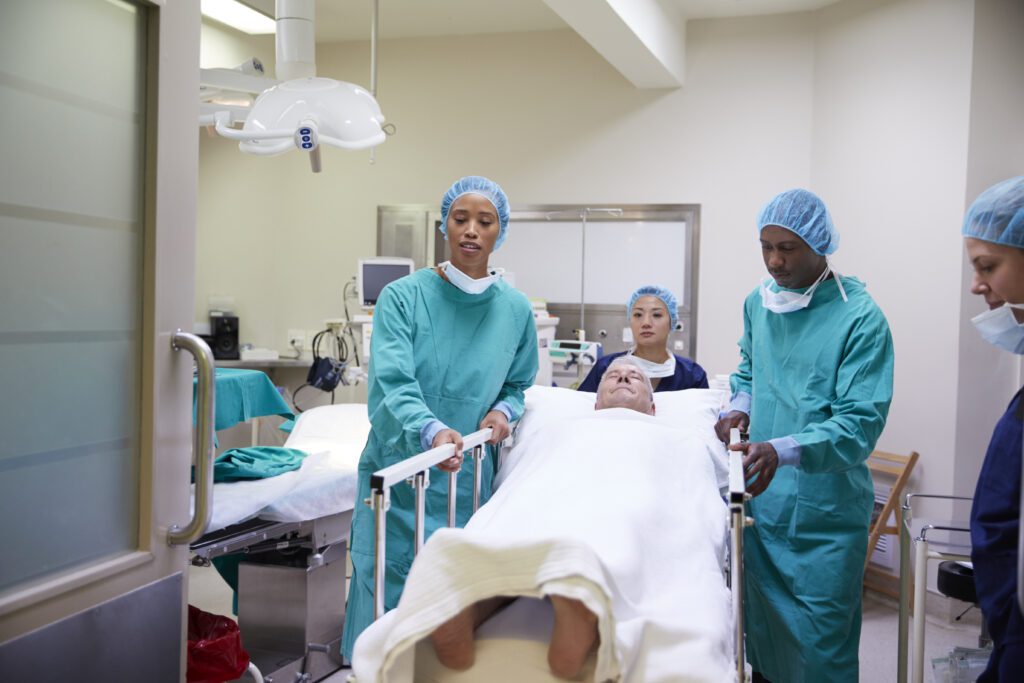
I usually start on Tuesdays because I’m per diem and I hate Mondays. Most ambulatory surgery centers operate Monday to Friday, closed on holidays, with no overnight shifts.
I clock in at 8 a.m., check in with my lovely charge nurse, and see if I’m assigned to Pre-Op or PACU.
I’m usually assigned to PACU.
Since I’m per diem, I don’t have a permanent spot—unlike full-time nurses who show up every day. I save two patient pods side by side, and that becomes my territory for the shift.
What Is Outpatient PACU Nursing Like?
Unlike inpatient or floor nursing, as a PACU nurse, you usually don’t have a patient automatically assigned to you when you arrive. You typically wait for a patient to come out of the OR. Sometimes that takes only a few minutes, but other times it could be an hour before you receive your first patient.
So while I’m waiting, I get my area ready for the day.
I check and make sure I have all the supplies I need for the day.
I make sure I have:
- Oxygen masks
- Nasal cannulas
- “Christmas tree” oxygen connectors
- Suction setup
- Gauze and tape for heplocks
- Thermometer
Then I log into the computer, check the OR board, and try to guess whether the day is going to be easy or one of those “why did I come to work today?” days.
It really depends on the number and type of surgical cases scheduled.
If it’s taking a while for the OR to bring me a patient, I usually help the other nurses who already have patients. This might mean helping with discharge instructions, getting patients dressed, or preparing them for discharge home.
A Typical Day in Outpatient PACU
Of course, every day is different, but my workday typically looks something like this:
8:00 AM: Arrive in the unit. I check with my charge nurse to see whether I’m working Pre-Op or PACU that day.
8:05 AM: I’m assigned to PACU. I log into my computer, check the OR schedule, census, and types of cases for the day. Usually, you can kind of gauge from this whether you’re going to have a good day.
8:30 AM: Typically receive my first patient from the OR.
10:00–10:30 AM: First 15-minute break.
12:00 PM: By this point, I’ve usually taken care and discharged of at least two to three patients, depending on whether I received fast-track cases, sedation/MAC cases, or patients recovering from general anesthesia.
12:30–1:00 PM: 30-minute lunch break.
1:00–3:00 PM: More patients. By this point, I’m usually on my fourth or fifth patient of the day.
3:00–3:15 PM: Last 15-minute break.
3:30–4:30 PM: I may receive one more general anesthesia patient or possibly two fast-track patients.
4:30 PM: Clock out. If my last patient isn’t ready for discharge before I leave, I give report and endorse the patient to another PACU nurse who is staying later.
And that’s basically what a typical day in outpatient PACU looks like. Of course, the pace can change dramatically depending on the OR schedule, the types of anesthesia, and how smoothly each patient recovers.
Related reading:
(Almost) Complete Guide to PACU Nursing
Why I Prefer Working as a Pre Op and PACU Nurse
Downsides to Working as a PACU Nurse
Easy PACU Recoveries
Cataract Surgery
These are fast-track cases. Usually no sedation, sometimes not even NPO. Easily some of the simplest PACU recoveries.
Hand Surgeries
Carpal tunnel, trigger finger, ganglion cysts. Usually local anesthesia with maybe a little fentanyl. Patients are awake and ready to go within an hour. Some even go back to work the same day.
Pain Management Procedures
We do a lot of these: lumbar or cervical epidurals, ketamine infusions, and radiofrequency ablations. Some patients receive sedation, some don’t. Most nap for a bit, wake up, and go home.
Harder PACU Recoveries:
Pediatric Cases (Circumcisions and minor urology procedures)
Babies cry when they wake up and can’t tell you what’s wrong. I thought becoming a mom would make me better with this. Nope. Still not a peds nurse at heart.
Most parents are fine, but sometimes they panic like their kid’s head fell off.
Pediatric Surgeries (2–12 years old)
Tonsillectomies, adenoidectomies, and myringotomies. Often worse than infants. Lots of screaming, refusing meds, refusing popsicles. Also, I’m not a fan of giving narcotics to kids.
Orthopedic Surgeries
Knees, shoulders, elbows. If the nerve block works, great. If not, it’s Dilaudid and Fentanyl until their pain is controlled.
ENT / Nasal Surgeries
Septoplasty, turbinate reduction, sinus surgery.
Common PACU issues include:
• Headache
• Nausea
• Bloody nose
We usually apply a moustache dressing, give an ice pack, and wait it out.
Urology Procedures
Cystoscopy, ureteral stents, vasectomy, testicular biopsy. Usually straightforward. Some patients go home with a Foley catheter, others just need to void before discharge.
Abdominal Surgeries
Laparoscopic cholecystectomy and inguinal hernia repairs.
About 80% recover well, but patients over age 50 often must void before discharge.
Breast Surgery Cases
Biopsies, lumpectomies, excisions. Usually done under general anesthesia. Some patients go home with JP drains. Mild to moderate pain and nausea are common.
In PACU, we monitor vital signs every 15 minutes for at least an hour.
Once patients are:
• Awake
• Tolerating PO (juice or crackers)
• Pain and nausea controlled
Then they’re usually cleared for discharge.
Common medications we give as PACU Nurses
• Dilaudid 0.6–1 mg
• Fentanyl 50–100 mcg
Rarely do we need to call anesthesia for additional medication orders.
Once in a while, we call 911 for transfer to the ER, usually for things like uncontrolled blood pressure or neurological symptoms. But honestly, that’s rare.
Surgeries wrap up around 6 p.m., and most patients are discharged between 6:30 and 8 p.m. Then we close the surgery center for the night.
Working in Pre-Op as an Outpatient Surgery Nurse

Occasionally I cover Pre-Op, either because we’re short staffed or I’m helping a co-worker cover their shift.
Pre-Op moves fast.
Lots of chart review, patient interviews, IV starts, and trying not to miss anything while the OR team waits impatiently.
Each nurse typically manages 5–7 patients per 8-hour shift.
Before picking up a patient, I:
• Review medical history and comorbidities
• Scan medications (blood thinners, antibiotics, GLP-1 medications)
• Check for recent ER or urgent care visits
• Confirm orders and surgical consents
I also read the most recent progress notes.
One time I missed a note about a patient being evaluated for possible scabies. PACU caught it post-op. Thankfully it was a false alarm, but it could’ve shut down the OR for the whole day.
Pre-Op Supplies
• Hospital gown
• Non-skid socks
• Surgical head cover
• Warm blanket
• Vitals cart
Pre-Op Routine
• Start IV (usually 20 gauge)
• Hang 1L Lactated Ringers
• Check blood glucose if diabetic
• Administer pre-op meds: Tylenol, Pepcid, Decadron, sometimes a Scopolamine patch
• Document everything
Anesthesia and the surgeon will stop by to talk with the patient and mark the surgical site. Once everything looks good, the OR team picks up the patient and we move on to the next one.
Random Pre-Op Things You Might Not Know as a Pre Op Nurse
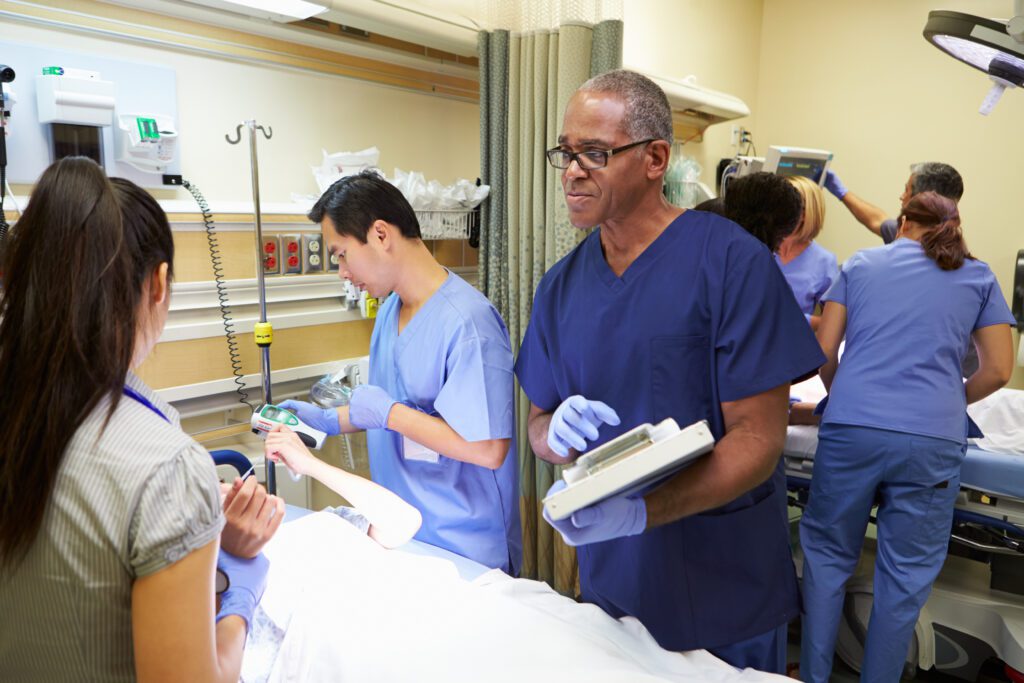
• Pediatric cases require an emergency weight-based medication sheet in the chart at all times
• Nerve blocks are often done bedside in Pre-Op with fentanyl or Versed
• Some cataract surgeries are fast-track cases with no NPO requirement, just lots of eye drops
Pros and Cons of Ambulatory Surgery Center Pre op and PACU Nursing
Pros
• Most patients are ambulatory and relatively healthy
• Closed weekends and holidays/no calls • No night shifts
• Not constantly in fight-or-flight mode like inpatient units
Cons
• Can still be hectic with 7–8 admits and discharges in one shift
• Mostly 8-hour shifts (I prefer 10 or 12 hour shifts)
• Pre-Op can be very fast-paced because OR time is expensive
• Some clinical skills can get rusty beyond IV starts and assessments
But honestly?
I’ll take it. It’s worth it.
Final Thoughts as an Ambulatory Surgery Center Pre OP and PACU Nurse
If you’re looking for a fast-paced but manageable nursing job where most patients are stable and ambulatory, working in an Ambulatory Surgery Center (ASC) might be a great fit.
Compared to inpatient nursing, it can offer a better work-life balance, lower stress levels, and more predictable schedules.
Related Posts: