
Kind of an embarrassing personal story as a Pre Op and PACU nurse, but it just occurred to me that I’ve been completing PASS (Post Anesthesia Scoring System) assessments on my Pre Op patients, and I only realized it last month. Lol.
I think it’s because working in Pre Op can be so fast paced and routine that, with the PASS assessment sitting right in the middle of my patient documentation flowsheet, filling it out had become almost automatic, even in the Pre Op setting.
That realization made me want to review my own practice as a PACU nurse, especially something as important as the appropriate use of the PASS Score.
Check out what it takes to be a PACU Nurse by reading:
How to Become a PACU Nurse: Experience & Requirements
PACU Nurse Interview Questions: The Actual Questions I Was Asked
What Is the PASS Score in PACU?
The PASS (Post Anesthesia Scoring System) is a scoring tool we use as PACU nurses to help evaluate a patient’s progress during post anesthesia recovery, particularly toward the goal of safe discharge or transfer to a lower level of care.
The scoring system also helps standardize patient assessments, promote consistency, and, more importantly, help PACU nurses and other clinicians identify patients who may require additional assessment or medical intervention.
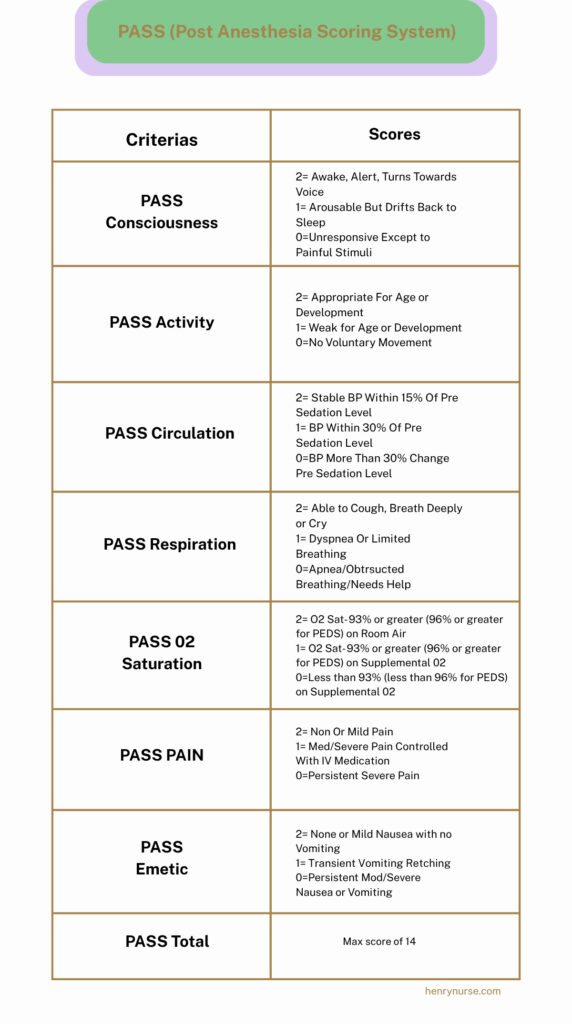
The PASS scoring system used in my PACU evaluates seven clinically relevant parameters:
- Consciousness
- Activity
- Circulation
- Respiration
- Oxygen saturation
- Pain
- Emesis (nausea and vomiting)
Why Do PACU Nurses Use a Post Anesthesia Scoring System?
Aside from seriously helping PACU nurses assess patients’ discharge readiness, PASS scoring provides a more standardized and consistent approach to evaluating post anesthesia recovery.
Honestly, in my opinion, without an evidence based, standardized assessment tool, it would be much harder for PACU nurses and anesthesia providers to consistently evaluate and document a patient’s readiness for discharge or transfer.
We would probably end up relying much more on narrative documentation, which can vary significantly between clinicians.
Having a standardized scoring system helps us communicate our assessments more clearly and provides a measurable way to follow a patient’s recovery progress.
What Are the Seven Components of the PASS Score?
Consciousness
This is probably one of the first things you assess when a patient comes out of the OR and is wheeled into your PACU bay.
Most patients arrive sleepy or mildly to moderately sedated, depending on the type of anesthesia they received.
For patients emerging from general anesthesia, the anesthesia provider typically assesses their level of consciousness and readiness for transfer before leaving the OR.
During the first few minutes in PACU, even though patients may still be sleepy, we want to see that they are appropriately responsive to verbal or tactile stimulation.
The patient’s level of consciousness should continue to improve as the effects of anesthesia wear off.
PASS Consciousness Scoring
2 points: Awake, alert, turns toward voice.
1 point: Arousable but drifts back to sleep.
0 points: Unresponsive except to painful stimuli.
Activity
As a PACU nurse, observe the patient’s general movement when they arrive in PACU.
Are they moving their extremities independently? Can they reposition themselves in bed? Do they appear unusually weak?
A patient who demonstrates motor activity appropriate for their age and developmental status may receive a score of 2.
A patient who appears weaker than expected may receive a score of 1, while a patient with no voluntary movement receives a score of 0.
But take note of the phrase “appropriate for age or development.”
Because, obviously, we cannot expect a 95 year old lady who just underwent an ORIF to move around in bed the same way as a healthy 25 year old patient. Lol.
This is also why knowing your patient’s baseline functional status before surgery is so important.
Find out whether the patient already had limited mobility or required assistance with movement before surgery.
PASS Activity Scoring
2 points: Appropriate for age or development.
1 point: Weak for age or development.
0 points: No voluntary movement.
Circulation
As PACU nurses, we assess this category by monitoring the patient’s blood pressure and overall hemodynamic status.
The scoring criteria are based on the patient’s pre sedation blood pressure, which is why it is so important to know and document the patient’s baseline vital signs before surgery.
For example, let’s say your patient’s blood pressure is 80/50 mmHg (MAP 60) with a heart rate of 55 beats per minute.
Now, if you review the patient’s Pre Op vital signs and find that their blood pressure was very similar, or within 15% of their baseline, the blood pressure component may qualify for a score of 2 under this PASS system.
But that doesn’t automatically mean the blood pressure is clinically acceptable.
As PACU nurses, we still need to assess the patient’s overall perfusion, clinical condition, and any blood pressure parameters ordered by the anesthesia provider.
Remember that general anesthesia, sedatives, and opioids administered during surgery can contribute to hypotension, although hypertension may also occur during recovery.
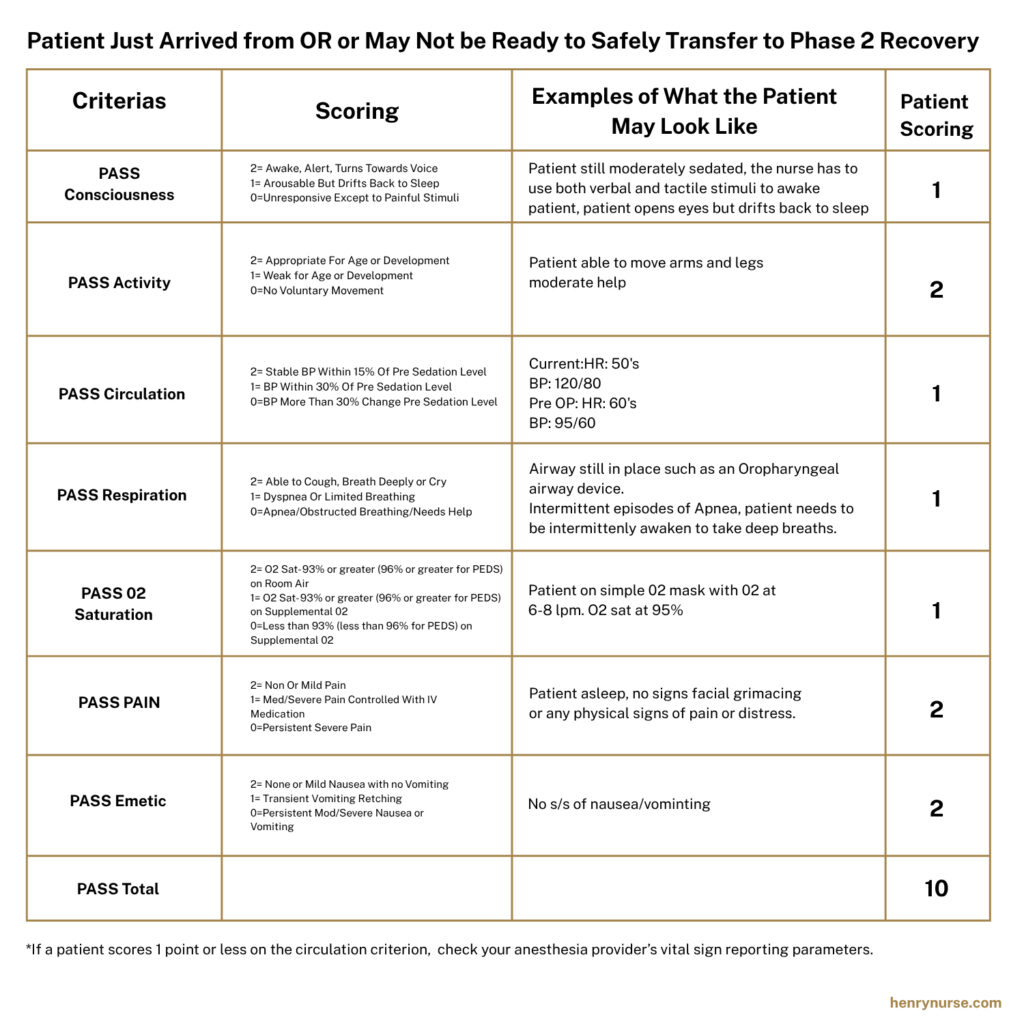
A significant change in blood pressure, particularly one exceeding 30% of the patient’s baseline, requires further assessment and appropriate notification of the anesthesia provider.
Note: The BP score assumes your facility’s PASS criteria use systolic BP. Verify the facility-specific scoring protocol.
PASS Circulation Scoring
2 points: Stable BP within 15% of pre sedation level.
1 point: BP within 30% of pre sedation level.
0 points: BP changes greater than 30% from pre sedation level.
Respiration
Generally, when patients arrive in PACU following general anesthesia, we expect them to be breathing spontaneously and maintaining adequate ventilation, with supplemental oxygen provided as needed.
As PACU nurses, one of our first assessments is to observe the patient’s breathing pattern, respiratory rate, chest rise, and overall respiratory effort.
Some patients may still be moderately sedated and experience periods of shallow breathing or intermittent apnea.
These patients require close monitoring and prompt assessment because respiratory depression can occur during early post anesthesia recovery.
If a patient develops apnea or airway obstruction, immediate airway support and appropriate escalation are necessary.
Depending on the situation, interventions may include repositioning the head and neck, airway maneuvers, supplemental oxygen, or additional airway support, with the anesthesia provider notified promptly.
PASS Respiration Scoring
2 points: Able to cough and breathe deeply.
1 point: Dyspnea or limited breathing.
0 points: Apnea or obstructed breathing.
Oxygen Saturation
Just like circulation, knowing your patient’s baseline oxygen saturation is important when assessing this category.
Obviously, an oxygen saturation below the expected or ordered range requires close assessment and appropriate intervention.
In my practice, many patients initially arrive in PACU receiving supplemental oxygen through a simple face mask or nasal cannula.
Depending on the type of anesthesia received and the patient’s recovery, they may require supplemental oxygen for the first several minutes or longer.
When a patient is more awake, breathing adequately, and able to maintain an acceptable oxygen saturation without supplemental oxygen, their score may improve.
For the PASS system used in my PACU, the oxygen saturation criteria also consider whether the patient requires supplemental oxygen.
PASS Oxygen Saturation Scoring
The scoring tool used in my facility includes specific SpO₂ thresholds and supplemental oxygen requirements for assigning 0, 1, or 2 points.
These thresholds should be interpreted alongside the patient’s baseline oxygenation, clinical condition, and anesthesia provider’s orders.
Pain
For postoperative pain assessment, I’m thankful that many patients I receive from the OR are relatively comfortable and may initially score 2 in this category.
Of course, that is not always the case.
Sometimes patients experience moderate to severe postoperative pain requiring IV analgesics, such as fentanyl or hydromorphone, as ordered by the anesthesia provider.
Under our PASS scoring system, pain that requires IV medication for control may receive a score of 1.
But obviously, if your PACU patient continues to experience severe or poorly controlled pain despite the ordered pain management interventions, further assessment and collaboration with the anesthesia provider are necessary.
There may be other factors contributing to the patient’s pain that require additional evaluation.
And, of course, we don’t want to send patients home with persistent, uncontrolled severe pain.
PASS Pain Scoring
2 points: No pain or mild pain.
1 point: Moderate to severe pain controlled with IV medication.
0 points: Persistent severe pain.
Emetic (Nausea and Vomiting)
Unfortunately, one of the most unpleasant and common side effects associated with anesthesia and postoperative opioid use is postoperative nausea and vomiting (PONV).
And just like pain, we don’t want to send a patient home while they’re actively retching or vomiting, right?
Thankfully, there are several interventions PACU nurses can use to help relieve PONV.
Depending on the patient’s condition and prescribed orders, these may include administering antiemetics such as ondansetron (Zofran) or metoclopramide (Reglan), providing IV fluids when indicated, dimming bright lights, and reducing unnecessary movement and environmental stimulation.
Sometimes even simple nursing interventions, such as minimizing noise and allowing patients to rest comfortably, can help.
PASS Emetic Scoring
2 points: No nausea or mild nausea without vomiting.
1 point: Transient vomiting or retching.
0 points: Persistent moderate to severe nausea or vomiting.
How Is the PASS Score Calculated?
The PASS scoring system used in my PACU consists of seven assessment categories, with each category receiving a score between 0 and 2.
The scores are added together to calculate the patient’s total PASS Score.
The maximum possible PASS Score is 14 points.
Understanding the PASS Score Range
Here’s how I generally interpret the individual scoring categories in my PACU practice.
A score of 2 indicates that the patient is meeting the most favorable criteria for that particular assessment category. This generally suggests that the patient is progressing toward recovery goals.
A score of 1 indicates that the patient has not yet met the highest scoring criteria and may still require additional recovery time, monitoring, or interventions.
For example, the patient may still require supplemental oxygen, pain management, or treatment for nausea.
A score of 0 indicates a more significant concern within that assessment category and may require prompt nursing intervention and further evaluation by the anesthesia provider.
Each individual category helps us identify the patient’s immediate recovery needs.
But when we add all seven categories together, the total PASS Score gives us a broader picture of the patient’s progress toward discharge or transfer readiness.
Of course, the score is only one part of the overall clinical assessment.
It is a guide, not the ultimate authority on whether a patient is safe to leave PACU.
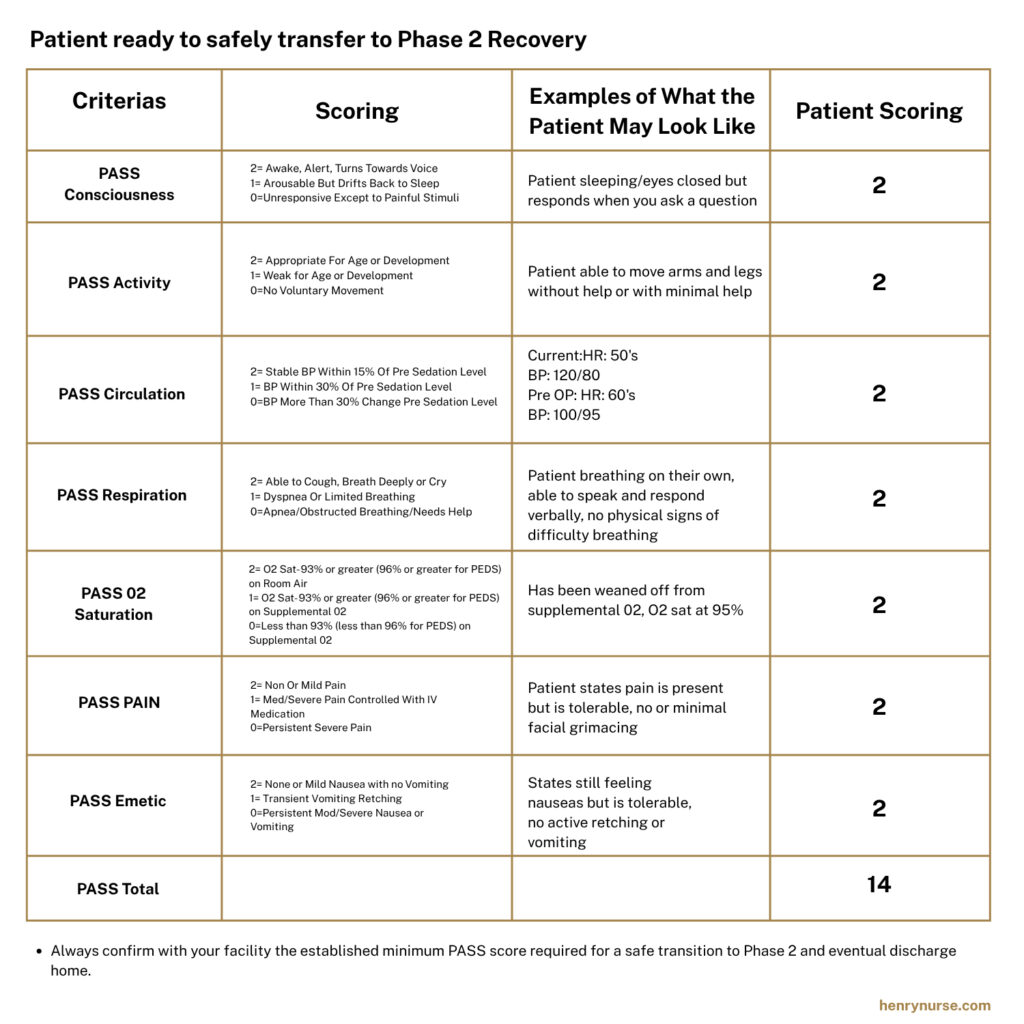
Examples of PASS Scores: (Illustrative Purposes only)
How Often Should PACU Nurses Assess the PASS Score?
This is specific to the facility where I work, but we typically assess and document our PACU patients’ PASS Scores every 15 minutes during the first hour, then every 30 minutes afterward, with another assessment completed before discharge or transfer.
However, if the patient’s individual assessment categories or total PASS Score are not progressing as expected, more frequent reassessment may be necessary.
The frequency should always be guided by the patient’s clinical condition, applicable monitoring requirements, and facility protocols.
What PASS Score Is Required to Leave PACU?
This depends on the healthcare facility and its established discharge or transfer criteria.
Always confirm with your facility the established minimum PASS score required for a safe transition to Phase 2 and eventual discharge home.
Where I work, the acceptable PASS Score for routine progression from PACU is generally 12 to 14 points.
But keep in mind that achieving an acceptable PASS Score does not automatically mean the patient is safe to go home or transfer to another unit.
As PACU nurses, we must evaluate the patient’s overall clinical condition.
After all, the PASS Score only assesses seven categories. There are other important clinical considerations that may affect discharge readiness, including:
- Possible surgical bleeding or other postoperative complications requiring further evaluation
- The patient’s ability to understand discharge instructions
- New or concerning cardiac arrhythmias
- Abnormal blood glucose levels
- The ability to void when required by the procedure or facility protocol
- The availability of appropriate support and assistance at home following surgery
And, of course, there are many other patient specific considerations.
PASS Score for Transfer to an Inpatient Unit
Even when PACU patients are expected to be admitted to the hospital for postoperative observation, they still require recovery assessments, including PASS scoring when this is part of the facility’s protocol.
For patients transferring to a medical surgical unit, the acceptable PASS Score in my facility is generally similar to that used for patients progressing toward outpatient discharge.
However, patients transferring to an inpatient unit may still require certain ongoing treatments, such as low flow supplemental oxygen through a nasal cannula, provided their condition is appropriate for the receiving unit.
Occasionally, patients may require a higher level of care because of persistent postoperative complications or the need for closer monitoring.
In these situations, the patient’s PASS Score may remain below the usual transfer threshold.
Transfer decisions must then be based on the patient’s clinical needs, the receiving unit’s capabilities, and the anesthesia or treating provider’s orders, rather than the numerical score alone.
PASS Score for Phase II Recovery or Discharge Home
PASS scoring and a patient’s progression to Phase II PACU recovery often go hand in hand.
Generally, when a patient’s PASS Score improves to an acceptable range, such as 12 to 14 in my facility, and the patient meets the other applicable clinical criteria, they may be ready to progress to Phase II recovery.
At this stage, the patient is closer to the goal of safe discharge home.
However, readiness to leave Phase I PACU is not necessarily the same as readiness for discharge home.
Patients must still meet the facility’s additional discharge requirements.
PASS Score vs. Modified Aldrete Score: What’s the Difference?
Another commonly used post anesthesia recovery scoring tool is the Modified Aldrete Score, sometimes referred to as an Aldrete based Post Anesthesia Recovery Score (PARS).
The Modified Aldrete Score evaluates five categories:
- Activity
- Respiration
- Circulation
- Consciousness
- Oxygen saturation
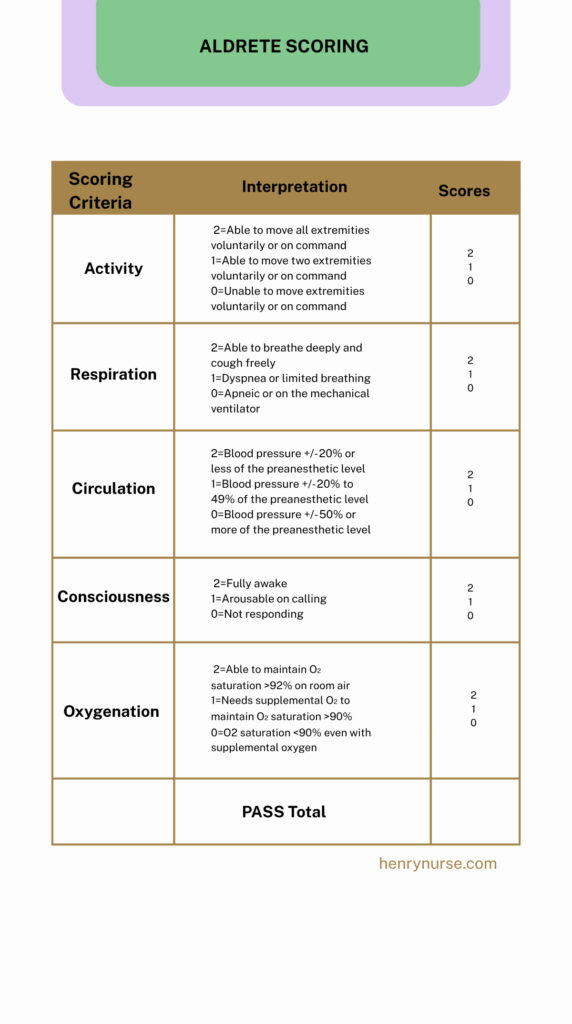
Unlike the seven category PASS system used in my PACU, the Modified Aldrete Score does not include pain and nausea or vomiting as separate scoring categories.
The original Aldrete scoring system was introduced in 1970 and later modified to replace the assessment of skin color with oxygen saturation, providing a more objective measure of oxygenation.
The Modified Aldrete Score has a maximum score of 10 points, with the acceptable threshold determined by the facility’s recovery and discharge policies.
Although these systems have different scoring criteria, they share the same general purpose of supporting the assessment of post anesthesia recovery.
Other PACU Scoring Systems Nurses May Encounter
Post Anesthetic Discharge Scoring System (PADSS)
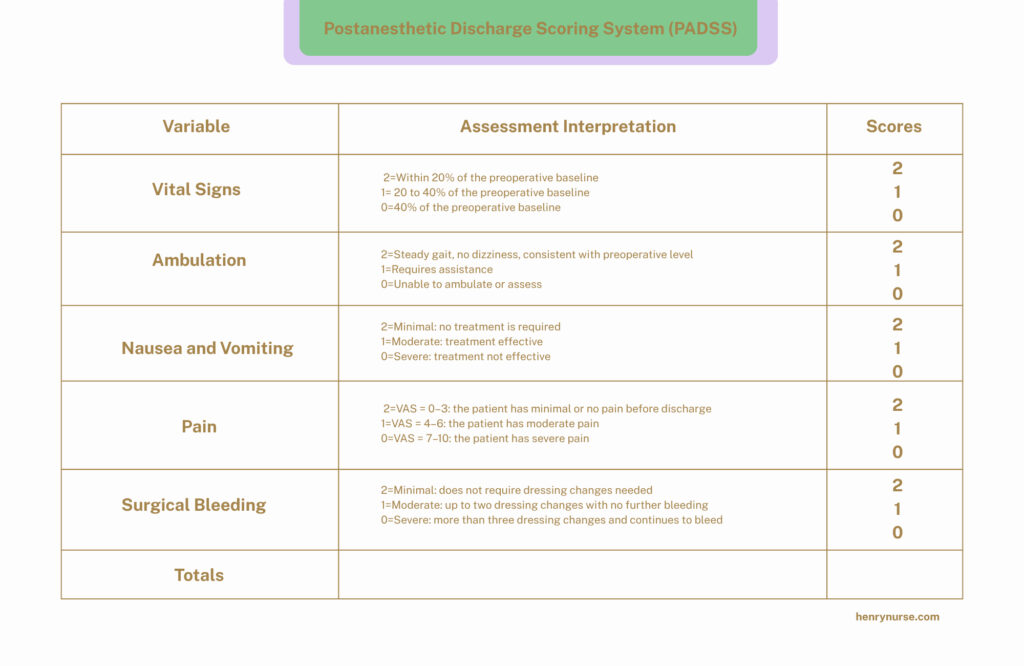
PADSS is another scoring tool commonly associated with ambulatory surgery, particularly when evaluating a patient’s readiness for discharge home.
It assesses factors such as vital signs, ambulation, pain, nausea and vomiting, and surgical bleeding.
White Fast Track Score
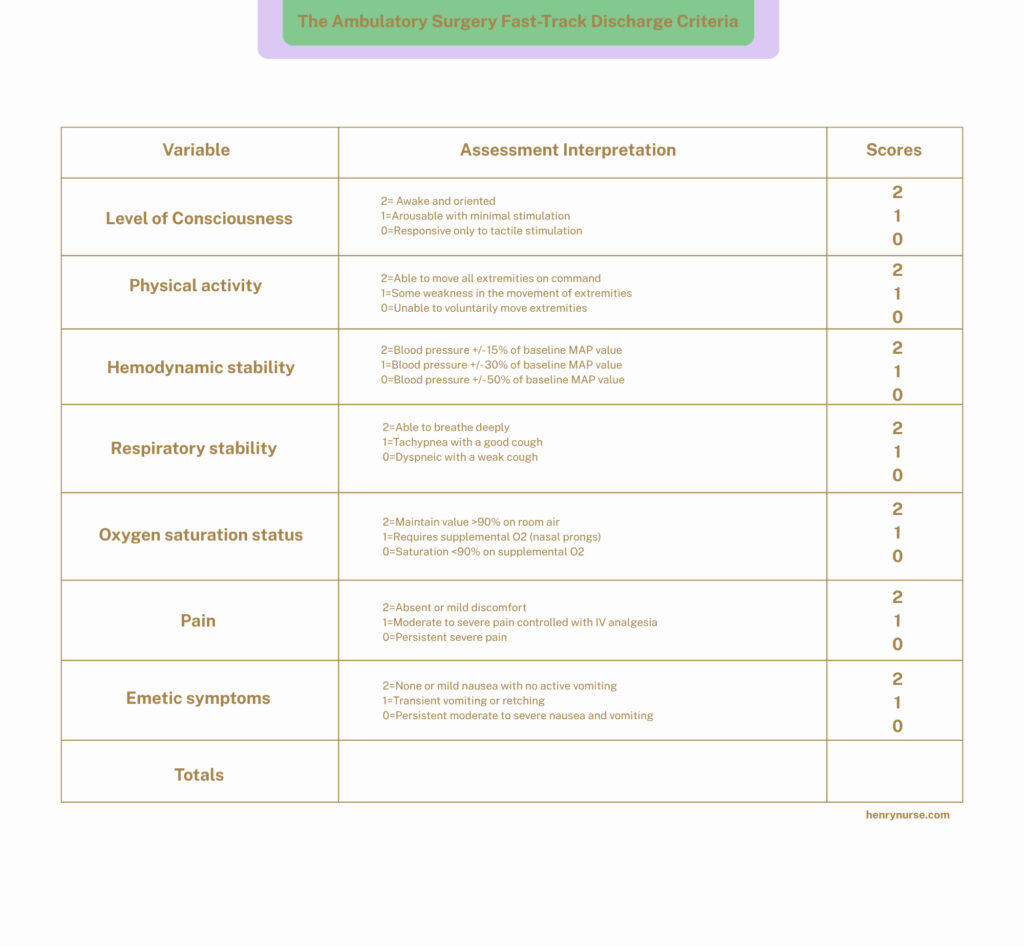
The White Fast Track Score, also known as the Ambulatory Surgery Fast Track Discharge Criteria, was developed to help identify appropriate patients who may be able to bypass traditional Phase I PACU recovery.
With advances in surgical techniques and anesthesia, some ambulatory surgery patients recover rapidly enough to qualify for an accelerated recovery pathway.
Of course, this depends on patient selection, the type of anesthesia, clinical stability, and facility protocols.
Why the PASS Score Doesn’t Replace Clinical Judgment
Even though PASS scoring is one of the most helpful tools we use as PACU nurses to assess patients during their recovery period, it should never be the only tool we rely on.
Nothing replaces the clinical judgment of the PACU nurse, anesthesia provider, or surgeon when determining whether a patient is truly safe for discharge home or transfer to another level of care.
Personally, as a PACU nurse, I’ve cared for patients with satisfactory PASS Scores, but something about my overall assessment made me want to double check with the anesthesia provider before sending them home.
And honestly, I’m usually very thankful that I asked for that second opinion.
Because sometimes, the numbers look good, but the overall clinical picture tells you something else.
When a Patient Meets the Score but May Not Be Ready for Transfer
There will be situations when patients achieve an acceptable PASS Score of 12 to 14 but may still not be appropriate for discharge or transfer.
One example I commonly encounter involves our joint replacement patients.
Based on our facility’s orthopedic surgery protocols, some patients undergoing joint replacement are required to meet specific physical therapy milestones before they can safely go home.
Even if their PASS Score is acceptable, patients who cannot meet those mobility requirements may need overnight hospital admission.
There are also other postoperative concerns that can affect discharge readiness, even when the PASS Score is satisfactory.
For example:
- Surgical site bleeding
- High grade fever
- Persistent dizziness that increases the risk of falls
- Other unexpected postoperative complications
These are situations where PACU nurses must look beyond the numerical score and consider the patient’s entire clinical picture.
Frequently Asked Questions About PASS Scoring in PACU Nursing
What Is the Maximum PASS Score?
In the PASS system used in my PACU, there are seven scoring categories, each receiving 0 to 2 points.
Therefore, the maximum PASS Score is 14 points.
What Is a Passing PASS Score for PACU Discharge?
The acceptable PASS Score depends on the facility’s established protocols and anesthesia discharge requirements.
In my PACU, the usual acceptable range is 12 to 14 points for routine progression from recovery.
However, a satisfactory PASS Score does not automatically establish discharge readiness.
Patients transferring to inpatient units may have different care requirements, and those requiring critical care may be transferred under separate clinical criteria and provider orders.
Is the PASS Score Used for Both Inpatient and Outpatient Surgery?
Yes. The PASS system used in my practice can support recovery assessments for patients undergoing both inpatient and outpatient surgical procedures.
However, different PACUs may use different post anesthesia scoring systems, depending on their institutional policies and patient populations.
What Is the Difference Between PASS and Aldrete Scoring?
The Modified Aldrete Score evaluates five categories: activity, respiration, circulation, consciousness, and oxygen saturation.
Meanwhile, the PASS system used in my PACU evaluates seven categories, including the same five general recovery domains plus pain and emetic symptoms.
Both tools support the assessment of post anesthesia recovery, but their scoring criteria and total possible scores differ.
Final Thoughts From a PACU Nurse
As a PACU nurse, learning how to properly use the PASS scoring system is incredibly helpful in identifying our patients’ progress, or hopefully not their decline, toward the goal of safe discharge or transfer.
But one thing I’ve learned from working in PACU is that we should never blindly follow the numbers.
The PASS Score gives us a structured way to evaluate recovery, but it should always be combined with a good clinical eye, thorough nursing assessment, and sound clinical judgment.
Because at the end of the day, our goal isn’t simply to get a patient to a passing score. It’s to make sure they’re truly safe to leave our care.
Related Reading:
Phase I vs Phase II PACU: What’s the Difference?
Sources: